


Inverter
Brands
- Aplex
- Auer
- Balluff
- Beckhoff
- Binder
- Bk Micro
- Detas
- Detas Ev Chargers
- Detas Ultra
- Dis Sensors
- E+E
- Efort
- EL-MicroWave
- Elco
- Eliko
- Elvem
- Exenta
- Fatek
- Gamma System
- Haake
- Hilscher
- Invt
- Kathrein
- Lenord + Bauer
- Leuze
- Matrix Vision
- Microsonic
- Modus
- Novotechnik
- Optris
- Pizzato
- Posital Fraba
- Proxitron
- ReeR
- Senpum
- Siemens
- Stego
- Tekima
- Telco Sensors
- Teleradio
- Tkd
- Toshiba
- Trafag
- Turck Banner
- Weintek
- Werma
Products
- Capacitive Sensor
- Safety Light Curtains
- Pressure Transducer
- Laser scanner
- Cable Entry
- Inverter
- Encoder
- EV Charger
- Power Supplies
- Ultrasonic/Radar Sensor
- PLC
- Industrial Robot
- Industrial PCs
- Real Time Location System
- Photoelectric Sensors
- Cabling/Networking
- Temperature sensors
- Humidity and Flow Sensors
- Online shop
- Vision systems
- Industrial Gateway
- Industry 5.0
- Safety devices
- Mechanical limit switch
- Static Eliminator
- Visual signals
- HMI Panel
- Linear Transducer
- Industrial Barcode Readers
- Brushless Motor
- Inductive sensor
- Industrial Safety Radio Remote Controls
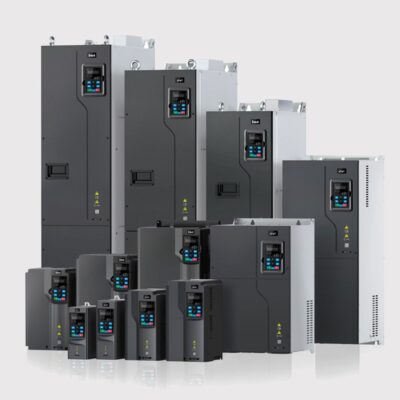
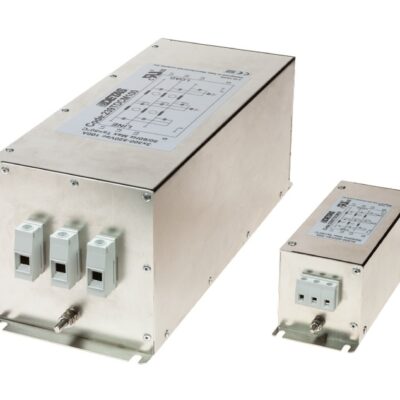
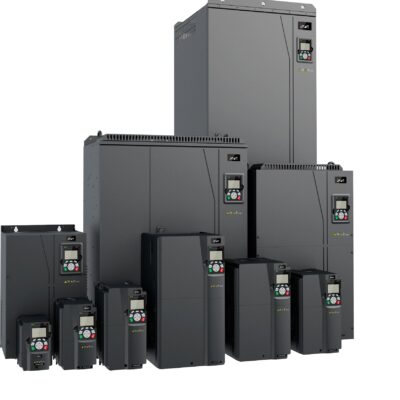
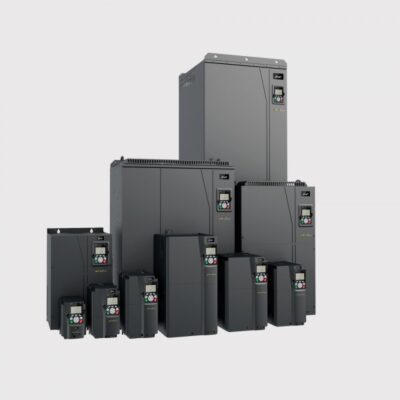
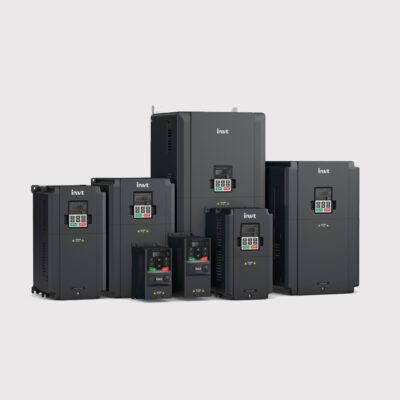
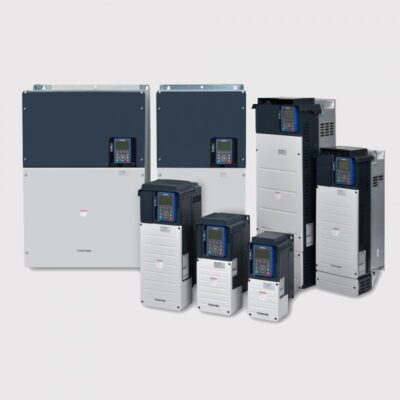
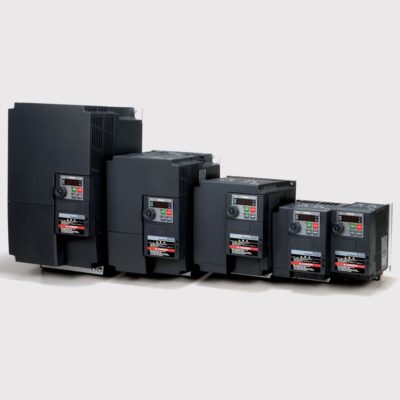
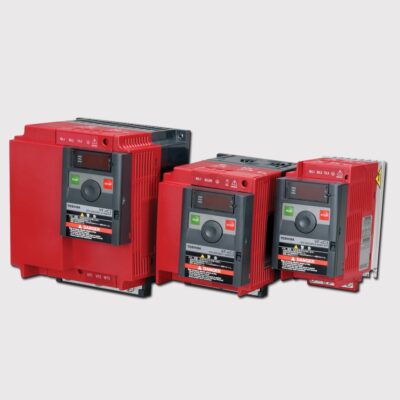
Inverter: what it is, how it works, and when to use it
Inverter means "inverter." In electronics, an inverter is an input/output electronic device capable of converting an incoming direct current into an outgoing alternating current, changing its amplitude and frequency parameters. It is the antithetical device to a current rectifier.
Inversion becomes necessary when we need to power an alternating current motor or machinery with a direct current electrical energy source.
Inverter: what it is and how it works
As already mentioned, an inverter is an electronic device whose function is to transform a direct current (DC) into an alternating current (AC) at a specific voltage and frequency, utilizing a direct current source.
The inverter is normally used to power accumulators, systems, air conditioners, and electric motors, including those for vehicles. Therefore, it is employed when a conversion from direct current to alternating current is required.
An inverter can also be considered a "rectifier-inverter" powered by alternating current and used to vary the voltage and frequency of the outgoing alternating current based on the incoming one (for example, for powering certain operating machines).
An inverter can only be defined as such when the device is static. If the device in question is instead of the rotating type, it is more properly defined as an inverting or converting electrical machine.
The operation of an inverter varies based on the design. Some are entirely electronic, while others combine mechanical effects and electronic circuits.
Depending on the type of design implemented to regulate the output voltage and current, inverters can produce different types of waves:
square;
sinusoidal;
modified sinusoidal;
pulse width modulation.
The operating mechanism of inverters also differs based on the field of application. Inverters used to power motors, for example, work by regulating the frequency and amplitude of the voltage. Inverters used for uninterruptible power supplies (UPS), on the other hand, are designed to provide a pure sinusoidal voltage with constant amplitude and frequency.
Inverter: the various types
There are various types of inverters on the market with the following characteristics:
Single-phase inverter: 230 VAC single-phase power supply and three-phase output with a line-to-line voltage of 230 Volts. They can be coupled with small motors up to 2.2 kW and a nominal voltage of 230 V;
Three-phase inverter: 400 VAC three-phase power supply and three-phase output with a line-to-line voltage of 400 Volts. They are used as frequency converters for three-phase motors and are employed in multiple applications, thanks to output powers ranging from 0.7 kW to 500 kW;
Digital inverter: characterized by the presence of a LED display, which allows the operator to easily set and monitor the inverter parameters;
Energy-saving inverter: features a non-continuous operating frequency, thus ensuring electrical energy savings;
Hybrid inverter: used to manage photovoltaic systems connected to the battery and/or the grid. It is equipped with additional mechanisms that allow it to decide whether to send all the current to the user for consumption, or whether to divert it, in whole or in part, to the battery or the power grid;
Fixed-installation power inverters: used to convert direct current for refrigeration compressors, power grids, electricity production, and uninterruptible power supplies (UPS).
Inverters: main applications for industrial process efficiency
Inverters find numerous applications in the industrial context, primarily to improve the efficiency and flexibility of production processes and to control electrical energy management. Here are some of the main applications:
Electric motor control: inverters are widely used to control the speed, torque, and direction of AC (alternating current) electric motors, especially in applications requiring precise speed regulation, such as conveyor belts, fans, pumps, and processing machinery;
Industrial automation processes: inverters are fundamental in automation systems, where they allow for the precise control of industrial machines and processes, contributing to increased efficiency, safety, and production flexibility;
Emergency power and UPS: inverters are key components in uninterruptible power supply (UPS) systems, where they provide AC power to critical loads from batteries or other DC sources during power outages or grid fluctuations;
Power transmission: inverters are employed in high-voltage direct current (HVDC) power transmission systems, which enable the efficient transfer of electrical energy over long distances or between non-synchronized grids;
Electrical transformation: in some applications, inverters are used to convert voltages and frequencies, allowing the use of equipment designed for different electrical standards or for testing equipment with specific supply voltages/frequencies;
Renewable energy production: in solar photovoltaic systems and wind farms, inverters are essential for converting the direct current (DC) generated by solar panels or wind generators into alternating current (AC), compatible with the power grid or for on-site use.
These applications highlight the importance of inverters in improving energy efficiency, operational flexibility, and the sustainability of industrial processes. ... read more