


Humidity and Flow Sensors
Brands
- Aplex
- Auer
- Balluff
- Beckhoff
- Binder
- Bk Micro
- Detas
- Detas Ev Chargers
- Detas Ultra
- Dis Sensors
- E+E
- Efort
- EL-MicroWave
- Elco
- Eliko
- Elvem
- Exenta
- Fatek
- Gamma System
- Haake
- Hilscher
- Invt
- Kathrein
- Lenord + Bauer
- Leuze
- Matrix Vision
- Microsonic
- Modus
- Novotechnik
- Optris
- Pizzato
- Posital Fraba
- Proxitron
- ReeR
- Senpum
- Siemens
- Stego
- Tekima
- Telco Sensors
- Teleradio
- Tkd
- Toshiba
- Trafag
- Turck Banner
- Weintek
- Werma
Products
- Capacitive Sensor
- Safety Light Curtains
- Pressure Transducer
- Laser scanner
- Cable Entry
- Inverter
- Encoder
- EV Charger
- Power Supplies
- Ultrasonic/Radar Sensor
- PLC
- Industrial Robot
- Industrial PCs
- Real Time Location System
- Photoelectric Sensors
- Cabling/Networking
- Temperature sensors
- Humidity and Flow Sensors
- Online shop
- Vision systems
- Industrial Gateway
- Industry 5.0
- Safety devices
- Mechanical limit switch
- Static Eliminator
- Visual signals
- HMI Panel
- Linear Transducer
- Industrial Barcode Readers
- Brushless Motor
- Inductive sensor
- Industrial Safety Radio Remote Controls
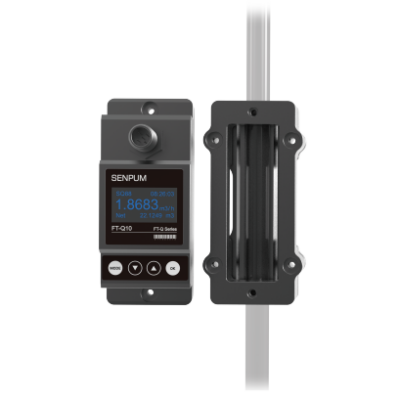


Humidity and Flow Sensors: Essential Technologies for Industrial Monitoring
In the field of industrial automation, monitoring environmental parameters such as humidity and fluid flow is fundamental to ensuring efficiency and precision in production processes.
Humidity sensors and flow sensors represent advanced and reliable solutions for collecting real-time data, improving operational control, and optimizing productivity.
Humidity Sensors: Purpose and Operation
Humidity sensors are indispensable tools for monitoring critical parameters in various industrial sectors. Their primary function is to measure relative humidity, which is the amount of water present in a given volume of air compared to its maximum capacity to hold water vapor at a given temperature.
These devices operate by detecting changes in physical properties, such as capacitance or resistance, generated by the presence of moisture. Their importance is crucial for ensuring the proper functioning of industrial, biomedical, and electronic devices, particularly in environments sensitive to:
electrostatic discharges;
humidity-related failures;
operating conditions with high voltages.
Many humidity sensors also integrate a temperature measurement function, given the intrinsic link between these two parameters. In fact, the greater the amount of water vapor present, the higher the perceived temperature will be—a relevant factor for applications requiring precise microclimate control.
Advantages and Applications of Humidity Sensors
Humidity sensors offer concrete advantages in terms of environmental and process control:
compact and cost-effective solutions, suitable for multiple applications;
control of humidity effects, to prevent damage and failures;
accurate local monitoring, for sensitive environments.
These sensors are used in numerous sectors, including:
medical;
home automation;
industrial;
agriculture.
Flow Sensors: How They Work
Flow sensors are essential tools for accurately monitoring the velocity or flow rate of fluids, whether liquid or gaseous. They use advanced technologies such as turbines, ultrasonics, or electromagnetic meters, converting fluid movement into electrical signals. In addition to flow rate, these devices often provide additional data, such as temperature, further improving their reliability and integration into industrial systems.
This type of sensor is designed to detect deviations from set limit values and prevent:
quality losses;
equipment damage;
interruptions in production processes.
Advantages and Application of Flow Sensors
The integration of flow sensors into industrial automation systems offers numerous benefits, making them indispensable for multiple applications:
Precision and real-time data, essential for continuous monitoring.
Cost reduction, thanks to more efficient resource management.
Versatility, with uses in various industrial sectors.
These devices are used in numerous sectors, including:
water;
chemical;
energy;
pharmaceutical.
Humidity and Flow Sensors: Indispensable for Industrial Processes
The implementation of flow sensors and humidity sensors in industrial processes allows for total control over environmental and process parameters, with concrete advantages that enable companies to:
Reduce waste, costs, and consumption, increasing operational efficiency.
Ensure product quality and operational safety, fundamental to business success.
Optimize production through accurate, reliable, and customizable data.
Thanks to these benefits, flow sensors and humidity sensors prove to be essential tools for companies aiming for innovation, sustainability, and operational excellence. ... read more