

Vision systems
Brands
- EL-MicroWave
- E+E
- Elco
- Balluff
- Microsonic
- Beckhoff
- Detas
- Siemens
- Efort
- Exenta
- Hilscher
- Invt
- Leuze
- ReeR
- Senpum
- Pizzato
- Detas Ultra
- Detas Ev Chargers
- Aplex
- Modus
- Toshiba
- Turck Banner
- Weintek
- Werma
- Novotechnik
- Eliko
- Optris
- Teleradio
- Haake
- Binder
- Lenord + Bauer
- Telco Sensors
- Gamma System
- Trafag
- Auer
- Bk Micro
- Tkd
- Kathrein
- Fatek
- Proxitron
- Tekima
- Matrix Vision
- Elvem
- Stego
- Posital Fraba
- Dis Sensors
Products
- Capacitive Sensor
- Safety Light Curtains
- Pressure Transducer
- Laser scanner
- Cable Entry
- Inverter
- Encoder
- EV Charger
- Power Supplies
- Ultrasonic/Radar Sensor
- PLC
- Industrial Robot
- Industrial PCs
- Real Time Location System
- Photoelectric Sensors
- Cabling/Networking
- Temperature sensors
- Humidity and Flow Sensors
- Online shop
- Vision systems
- Industrial Gateway
- Industry 5.0
- Safety devices
- Mechanical limit switch
- Static Eliminator
- Visual signals
- HMI Panel
- Linear Transducer
- Industrial Barcode Readers
- Brushless Motor
- Inductive sensor
- Industrial Safety Radio Remote Controls
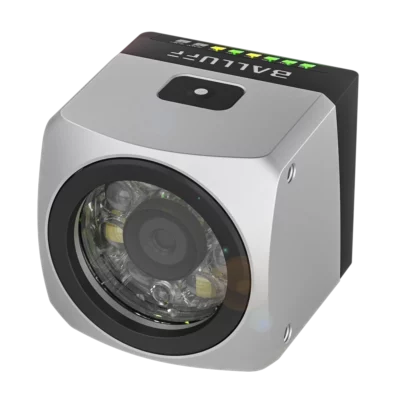
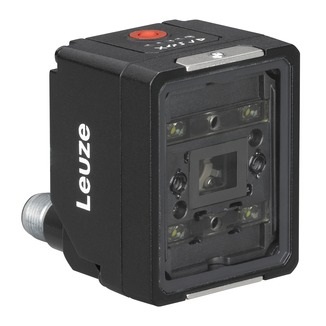
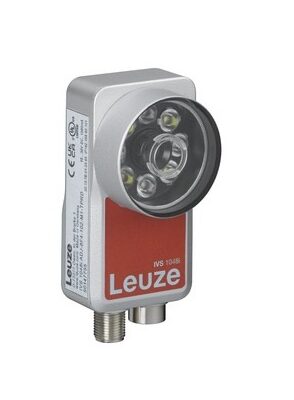
Machine vision systems: technological progress applied to the industrial sector
Vision systems consist of one or more devices that perform the data acquisition function and a device capable of receiving and analyzing this data through appropriate algorithms.
Vision systems: what they are
Machine vision systems are apparatuses that perform computer vision and visual inspection functions for multiple applications. The heart of the vision system consists of one or more cameras and appropriately selected light sources.
Added to these components is the system intelligence, represented by vision algorithms and management software, which are essential tools for communicating with other systems and interfacing with operators.
Vision systems are therefore powerful tools that are increasingly establishing themselves within companies: they guarantee precision, reliability, and stability. Furthermore, thanks to the high speeds that can be achieved by automating processes, productivity increases.
Industrial vision systems: applications
The design of vision systems is very flexible because the choice of devices is strictly linked to production needs and analysis requirements. Acquisition and lighting devices can give rise to numerous efficiency combinations.
Vision systems are devices that lend themselves very well to various industrial applications, especially in the field of visual inspection and quality control, because they allow many processes and functions to be automated.
Data acquisition can be carried out with many tools depending on the analysis. A primary factor can be the light frequency band on which the image is to be captured: most vision systems work in the electromagnetic radiation range between 390 and 750 nm. However, there are many sectors in which devices are able to see in ultraviolet and infrared, such as in the food, medical, environmental monitoring, and security sectors.
The production process is more closely controlled: analysis is performed in an objective, tracked, and documented manner. The type of data that can be collected is very broad and ensures a wider view without focusing only on the individual product.
These qualities make vision systems perfectly compatible with Industry 4.0 requirements. They are systems that allow communication and interaction with other devices and operators; they represent valuable sources of data from which to draw essential information that allows for the identification of critical parts of a production process and the resolution of potential issues before machine downtime occurs. In fact, they also allow for the interception of potential breakages before they can lead to the production of defective parts or damage to machinery.
Vision systems allow for many different types of checks:
Dimensional and morphological inspection of parts
Checks dedicated to code reading (alphanumeric text, barcodes, QR codes, and similar) and pattern recognition
Quality control
Quality control consists of searching for production defects: a task in which maximum precision and reliability are fundamental, because generally every type of production must meet often stringent quality requirements. Defects can be not only aesthetic but also functional and structural, which are fundamental for the finished product or for the final product/system for which it is intended.
Vision systems: main advantages in Industry 4.0
Vision systems are designed and built with the aim of performing analysis on digitally acquired images. They guarantee important advantages for companies intending to utilize Industry 4.0:
They allow for objective analysis under conditions and at speeds unparalleled compared to human capabilities, also eliminating the probability of human error;
By working faster, an increase in productivity is generated;
They operate without the need for contact with the object under examination. This is an important consideration, especially in biomedical fields, because it eliminates the possibility of unintentionally introducing damage and/or contamination;
They guarantee an even broader view of the entire production process, no longer limited solely to the individual product.
... read more