


Laser scanner
Brands
- Aplex
- Auer
- Balluff
- Beckhoff
- Binder
- Bk Micro
- Detas
- Detas Ev Chargers
- Detas Ultra
- Dis Sensors
- E+E
- Efort
- EL-MicroWave
- Elco
- Eliko
- Elvem
- Exenta
- Fatek
- Gamma System
- Haake
- Hilscher
- Invt
- Kathrein
- Lenord + Bauer
- Leuze
- Matrix Vision
- Microsonic
- Modus
- Novotechnik
- Optris
- Pizzato
- Posital Fraba
- Proxitron
- ReeR
- Senpum
- Siemens
- Stego
- Tekima
- Telco Sensors
- Teleradio
- Tkd
- Toshiba
- Trafag
- Turck Banner
- Weintek
- Werma
Products
- Capacitive Sensor
- Safety Light Curtains
- Pressure Transducer
- Laser scanner
- Cable Entry
- Inverter
- Encoder
- EV Charger
- Power Supplies
- Ultrasonic/Radar Sensor
- PLC
- Industrial Robot
- Industrial PCs
- Real Time Location System
- Photoelectric Sensors
- Cabling/Networking
- Temperature sensors
- Humidity and Flow Sensors
- Online shop
- Vision systems
- Industrial Gateway
- Industry 5.0
- Safety devices
- Mechanical limit switch
- Static Eliminator
- Visual signals
- HMI Panel
- Linear Transducer
- Industrial Barcode Readers
- Brushless Motor
- Inductive sensor
- Industrial Safety Radio Remote Controls
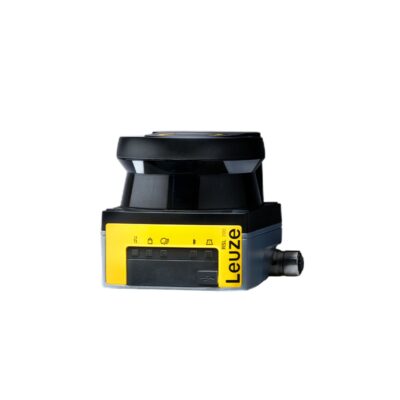
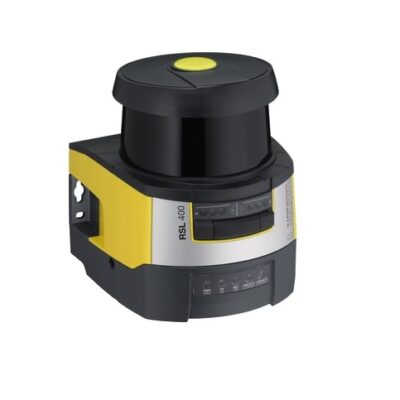
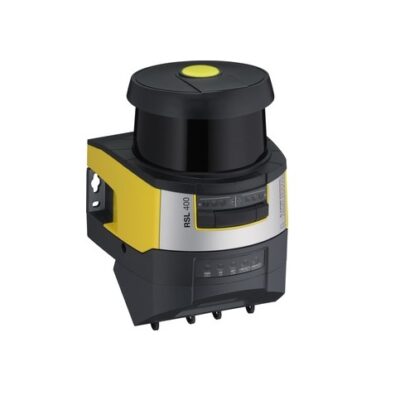
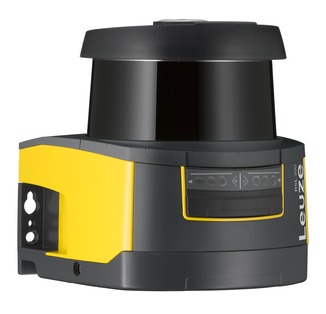
High-definition laser scanner: what it is and what it's used for
The laser scanner system is a tool capable of measuring the position of hundreds of thousands of points at very high speed, thus detecting the profile or size of a surface. The survey yields a very dense set of points called a “point cloud.” The goal is to perform dimensional controls or a 2D or 3D laser scan of an object. They are crucial elements in modern industrial safety systems, offering a versatile and reliable solution for monitoring and protecting work areas, machinery, and personnel. The ability of laser scanners to detect the presence of objects or people in real-time and react accordingly makes them indispensable in industrial environments where accident prevention and operational efficiency are priorities.
Laser scanner: what it's for and how it works
When referring to a laser scanner, we mean a direct measurement system. The measurements obtained are characterized by high instrumental precision, as they are officially documented by a calibration certificate.
These are non-contact devices that capture hundreds of thousands of points to measure an object or space using infrared laser technology, producing a detailed image in minutes.
The laser scanner emits an infrared laser beam onto a rotating mirror. The scanner head rotates, moving the laser across the object or area. Anything in the laser's path reflects the beam back to the scanner. This provides the geometry, which is then interpreted into 3D data. A complete measurement of distance and horizontal and vertical planes is thus generated.
The laser scanner is often moved by a robotic arm and typically acquires data through two systems:
Time-of-flight system: a single laser light pulse is emitted, and the distance to the endpoint is determined by measuring the time it takes for the light to be reflected back to an activated sensor;
Phase-shift system: in this case, an emitted laser light is also used, but the light intensity is modulated with specific waveforms. The reflection of the intensity patterns is shifted by the impact on the object's surface. Measuring the shift between the sent and received laser signals provides a precise distance calculation.
Laser scanners: various types
Different types of laser scanners are considered, with a brief overview presented.
Time-of-flight laser scanners
In this type of laser scanner, distance is determined by measuring the time elapsed between the emission of the laser pulse and its return to the sensor. Laser scanners of this type are particularly suitable for topography, as the signal maintains its geometric qualities even at long distances.
Phase-shift laser scanners
In this type of device, distance is measured by precisely knowing the phase of the laser wave at the moment of signal emission and upon receiving the reflected pulse. The resulting phase difference corresponds to the object's distance. Phase-shift laser scanners are primarily used in the architectural sector for interior surveys.
Triangulation laser scanners
Here, the emission and reception devices are separated by a fixed distance. The position of each point is determined by a trigonometric calculation similar to forward intersection in topography. Since the distance between the emission and reception devices is limited, the object to be surveyed must be placed at very small distances from the laser scanner. Consequently, this type of device can only be used in specific contexts and for objects a few tens of centimeters in size.
Laser scanners: ensuring industrial safety and efficiency
Laser scanners are sophisticated devices used in a wide range of industrial safety applications to protect people, machines, and infrastructure. Here's how they are applied in three specific areas: machine protection, robotic cells, and AGVs (Automated Guided Vehicles).
Machine Protection
Laser scanners are used to protect industrial machines, ensuring that operators or any objects do not enter hazardous zones. They can be programmed to monitor predefined areas around machines. If an object or person enters this area, the laser scanner detects the intrusion and can send a signal to stop the machine or activate an alarm, thereby preventing injuries or damage.
Robotic Cells
Robotic cells are areas where industrial robots perform specific tasks, such as assembly, welding, or packaging. These zones can be dangerous for operators due to the rapid and powerful movements of robots. Laser scanners contribute to the safety of robotic cells by creating a virtual barrier around the robot's work area. When the system detects an incursion into the protected area, it can immediately pause the robot's operation or bring it to a safe condition, reducing the risk of injury.
AGVs
AGVs are automated vehicles used for transporting materials within industrial environments. AGV safety is crucial, as they must move efficiently while avoiding collisions with people, obstacles, or other machines. Laser scanners mounted on AGVs allow them to detect obstacles along the vehicle's path. Based on the detected data, the AGV can slow down, stop, or change its path to avoid collisions, thus ensuring safety in the work environment.
... read more