


Temperature sensors
Brands
- Aplex
- Auer
- Balluff
- Beckhoff
- Binder
- Bk Micro
- Detas
- Detas Ev Chargers
- Detas Ultra
- Dis Sensors
- E+E
- Efort
- EL-MicroWave
- Elco
- Eliko
- Elvem
- Exenta
- Fatek
- Gamma System
- Haake
- Hilscher
- Invt
- Kathrein
- Lenord + Bauer
- Leuze
- Matrix Vision
- Microsonic
- Modus
- Novotechnik
- Optris
- Pizzato
- Posital Fraba
- Proxitron
- ReeR
- Senpum
- Siemens
- Stego
- Tekima
- Telco Sensors
- Teleradio
- Tkd
- Toshiba
- Trafag
- Turck Banner
- Weintek
- Werma
Products
- Capacitive Sensor
- Safety Light Curtains
- Pressure Transducer
- Laser scanner
- Cable Entry
- Inverter
- Encoder
- EV Charger
- Power Supplies
- Ultrasonic/Radar Sensor
- PLC
- Industrial Robot
- Industrial PCs
- Real Time Location System
- Photoelectric Sensors
- Cabling/Networking
- Temperature sensors
- Humidity and Flow Sensors
- Online shop
- Vision systems
- Industrial Gateway
- Industry 5.0
- Safety devices
- Mechanical limit switch
- Static Eliminator
- Visual signals
- HMI Panel
- Linear Transducer
- Industrial Barcode Readers
- Brushless Motor
- Inductive sensor
- Industrial Safety Radio Remote Controls
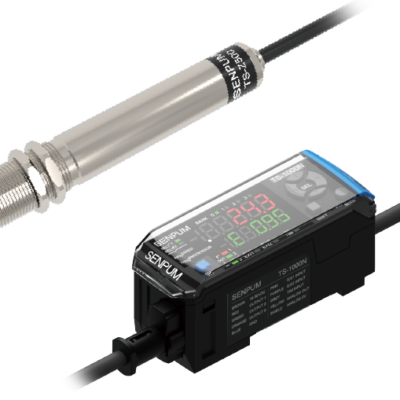


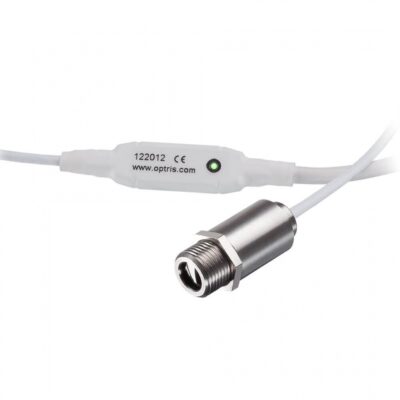
Temperature Sensors: Precise and Reliable Measurement for Every Need
Temperature measurement is essential in many industrial and environmental applications. Whether monitoring extreme conditions, hard-to-reach points, or environmental variables such as humidity, temperature sensors represent the ideal solution for obtaining fast, precise, and safe results.
Temperature Sensors: How They Work
Temperature sensors detect thermal variations and convert them into electrical signals that can be processed by control systems. Two main technologies exist:
Contact sensors: devices that measure temperature by coming into direct contact with the object or fluid to be monitored. This type of sensor is ideal for applications where direct contact does not alter the system or the material being analyzed.
Non-contact sensors: detect temperature without coming into physical contact with the object or fluid to be monitored, utilizing the radiation emitted by bodies. They are particularly useful in applications where direct contact is not possible or desirable, such as with moving objects, high-temperature materials, or hard-to-reach surfaces.
Temperature Sensors: Main Technologies
Temperature sensors encompass a wide range of technologies designed to measure temperatures precisely, quickly, and safely. This category includes:
Thermocouples: sensors consisting of two different metals joined at one end. They utilize the Seebeck effect, where a temperature difference in a circuit formed by metallic conductors or semiconductors generates electricity. These sensors are reliable and versatile, suitable for measurements reaching up to 1750°C.
Resistance Temperature Detectors (RTDs): utilize the property of certain pure metals, such as platinum, to change electrical resistance based on temperature. Powered by a constant current, they offer extremely precise measurements, perfect for applications requiring high reliability.
Thermistors or temperature-sensitive resistors: temperature detection sensors composed of semiconductor materials, sensitive to minimal temperature variations. They cover a range from -100°C to 325°C, making them particularly useful in fields requiring detailed measurements.
Pyrometers: designed for non-contact measurements, they detect the surface temperature of moving objects or in difficult environments, covering a wide range from -50°C to 4000°C.
Dew Point Sensors: fundamental for measuring the dew point, preventing condensation and ensuring quality in industrial processes.
Applications and Advantages of Temperature Sensors
Temperature sensors find application in a wide range of sectors, from manufacturing to the food, pharmaceutical, and HVAC industries.
Key advantages include:
ability to operate in extreme conditions;
measurement accuracy;
possibility of remote monitoring or non-contact measurement
Finally, Dew Point sensors offer critical humidity control, preventing condensation and contributing to safer, more sustainable, and high quality industrial processes. ... read more