

Inductive sensor
Brands
- EL-MicroWave
- E+E
- Elco
- Balluff
- Microsonic
- Beckhoff
- Detas
- Siemens
- Efort
- Exenta
- Hilscher
- Invt
- Leuze
- ReeR
- Senpum
- Pizzato
- Detas Ultra
- Detas Ev Chargers
- Aplex
- Modus
- Toshiba
- Turck Banner
- Weintek
- Werma
- Novotechnik
- Eliko
- Optris
- Teleradio
- Haake
- Binder
- Lenord + Bauer
- Telco Sensors
- Gamma System
- Trafag
- Auer
- Bk Micro
- Tkd
- Kathrein
- Fatek
- Proxitron
- Tekima
- Matrix Vision
- Elvem
- Stego
- Posital Fraba
- Dis Sensors
Products
- Capacitive Sensor
- Safety Light Curtains
- Pressure Transducer
- Laser scanner
- Cable Entry
- Inverter
- Encoder
- EV Charger
- Power Supplies
- Ultrasonic/Radar Sensor
- PLC
- Industrial Robot
- Industrial PCs
- Real Time Location System
- Photoelectric Sensors
- Cabling/Networking
- Temperature sensors
- Humidity and Flow Sensors
- Online shop
- Vision systems
- Industrial Gateway
- Industry 5.0
- Safety devices
- Mechanical limit switch
- Static Eliminator
- Visual signals
- HMI Panel
- Linear Transducer
- Industrial Barcode Readers
- Brushless Motor
- Inductive sensor
- Industrial Safety Radio Remote Controls
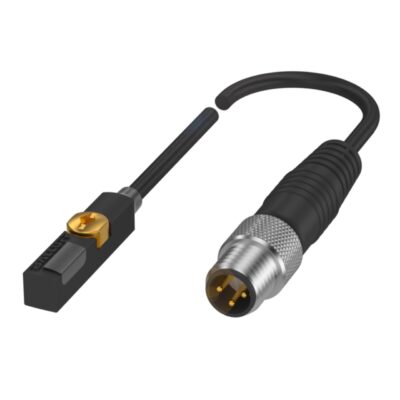
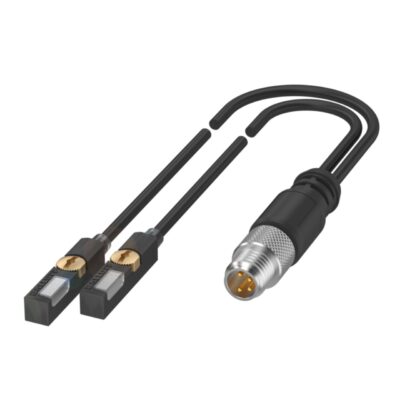
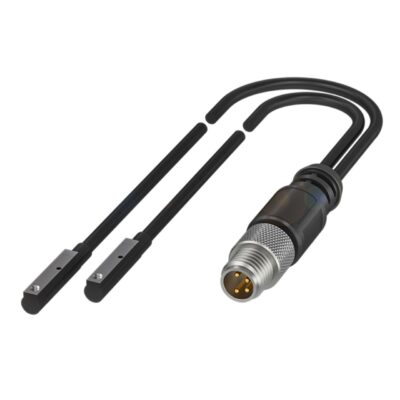
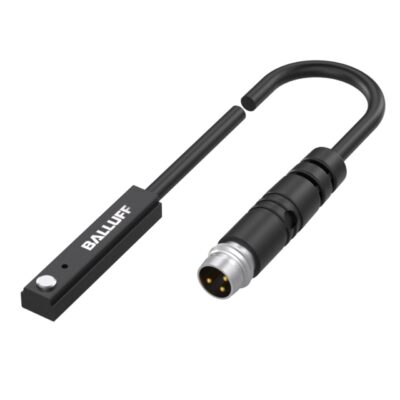
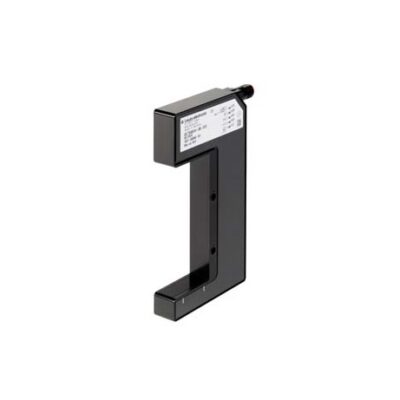
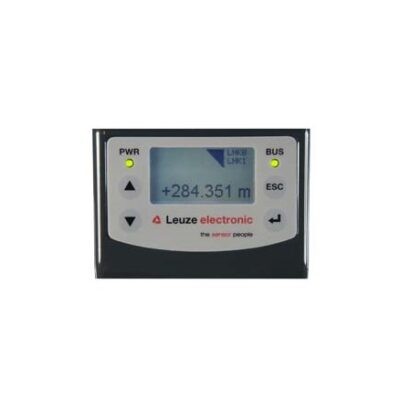
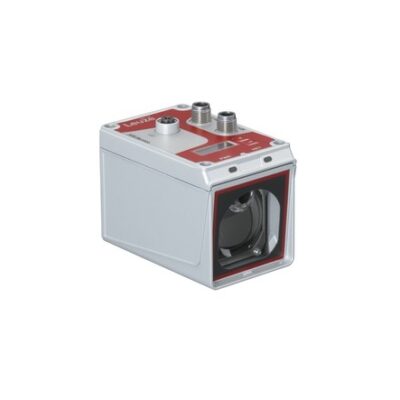
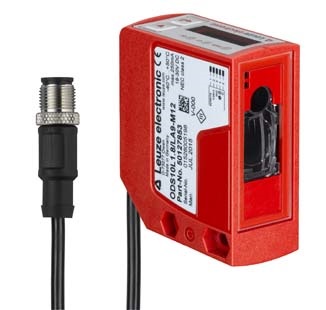
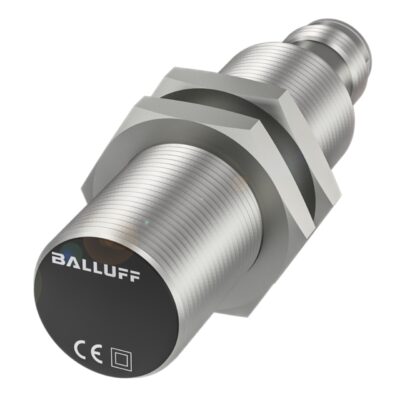
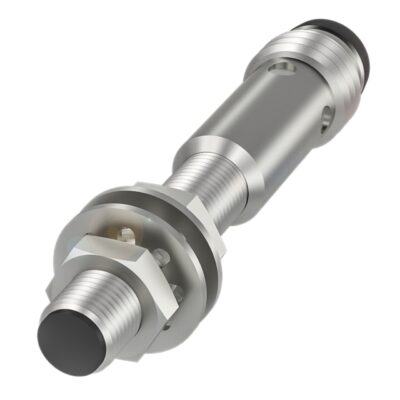
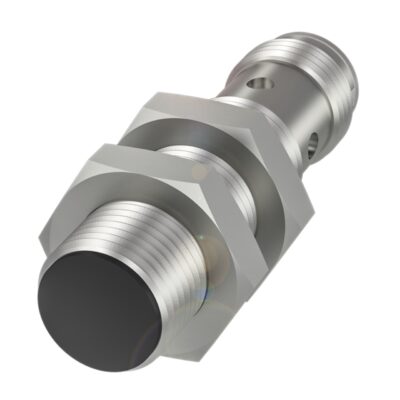
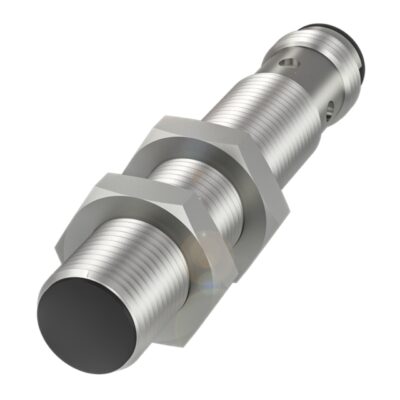
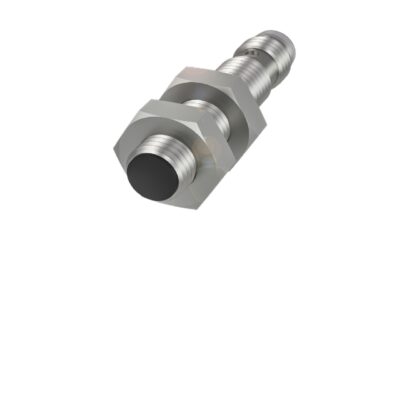
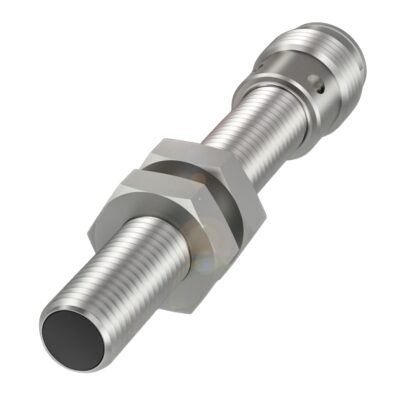
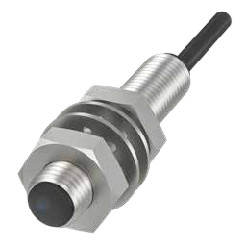
Inductive sensor: what it is for and how it works
Inductive sensors are fundamental proximity devices for the non-contact detection of metallic objects in machines and automatic systems.
Sensorline Automation provides a wide selection of professional Balluff and Leuze models, as well as technical advice and support for integration, spare parts, and replacements.
On this page, you will find the operating principle, application advantages, and a selection of available models. Also discover capacitive and ultrasonic sensors.
What does inductive sensor mean?
An inductive sensor is the type of proximity sensor that allows for determining, in the absence of contact, the presence and absence and potentially the distance relative to a metal object.
If a certain distance is breached, the sensor triggers an action.
The inductive sensor is therefore an indispensable tool in the field of industrial automation, across all industrial sectors, for example, as a means of guiding industrial machine gripper arms or monitoring liquid levels with the aid of metal floats.
Inductive sensors for position and speed measurement are available in different shapes, sizes, and technologies.
The inductive sensor is based on the transformer operating principle and on a physical phenomenon centered on alternating electric currents.
The phenomenon was discovered by Michael Faraday in 1831: he discovered that a primary current conductor could "induce" the transfer of a current flow to a second conductor.
The category of inductive sensors includes simple proximity switches, variable inductance sensors, variable reluctance sensors, synchros, resolvers, and rotary or linear transformer sensors (RVDT or LVDT).
Inductive sensor operation: what you need to know
As previously mentioned, the operation of inductive sensors is based on the transformer principle and on an alternating electric current phenomenon. The inductive sensor has an active surface on its front side, which in fact acts as an oscillator.
It generates an electromagnetic field in a semicircle.
A metal object introduced into the field weakens it.
This allows the sensor to recognize the distance and act accordingly.
If an industrial component falls below a certain distance, the inductive sensor induces a movement.
The number of actions an inductive sensor can induce per second is defined as the switching frequency.
The sensors are therefore also suitable for rapid production processes or real-time monitoring.
Inductive sensor: where is it used?
The inductive sensor is used in industrial environments for position monitoring of all types, valve position monitoring, and belt speed detection.
The wide versatility of the physical detection principle allows for the market launch of inductive sensors of various design types and sensor versions to adapt to specific operating conditions.
The inductive sensor is highly valued for its reliability even in harsh conditions.
For this reason, it represents an appropriate choice for safety-related applications that require high reliability even in particularly critical conditions.
Inductive sensors are mainly used in the automatic machine and tool sector, aerospace, railway, and heavy industry.
The solid performance of an inductive sensor is determined by basic physics and operating principles that generally do not depend on:
moving electrical contacts
temperature
humidity, water, and condensation
foreign bodies such as dirt, grease, grit, and sand.
What material does an inductive sensor detect?
An inductive sensor generally detects a wide set of metals at different distances, except for some special models, including:
steel
cast iron
nickel
stainless steel
copper
aluminum
brass
The inductive sensor detects metallic objects located in its measuring field without the need for contact. The inductive sensor uses the interaction of the metallic object as an electrical conductor with the alternating magnetic field emitted by the sensor.
Inductive sensor: advantages and disadvantages of use
The inductive sensor certainly plays a crucial role in the industrial field thanks to the multitude of advantages it presents, making it an exceptional device for the most critical contexts:
it operates without contact and is therefore wear-resistant;
it supports high levels of precision and switching frequencies;
it is insensitive to dirt, vibrations, and shocks;
resistant to short circuits;
the signal processing circuitry associated with the inductive sensor does not need to be placed in close proximity to the sensing coils.
Although outnumbered and of less importance compared to the advantages, there are also some downsides worth mentioning to understand if inductive sensors are the right solution. Here are some disadvantages of the inductive sensor:
it can only detect metals;
it requires great care to wind the coils, which makes production and the relative price expensive;
it supports short switching distances, which means multiple sensors may need to be connected in series;
magnetic fields can alter measurement accuracy, which can be disadvantageous for some types of motors.
... read more